
-
Tweets48
-
Followers122
-
Following109
-
Likes310
I'll be at @CVPR (briefly), speaking at the Sense of Space workshop tomorrow @ 9:15 about how robots may be slowing down robotics. I spent the past year thinking more about the role of human data, simulation, and dexterous manipulation; happy to connect if you're doing the same!


We are back. After one year of quiet building. Introducing GENE-26.5, our first robotic brain that takes a major step toward human-level capability. For years, robotics has struggled to learn from the world’s largest and valuable data source: Humans. Solving it means rethinking the whole stack from the ground up: - A robotics-native foundation model. - A 1:1 human-like robotic hand. - A noninvasive data collection glove for motion, force, and touch. - A simulator that turns weeks of experiments into minutes. GENE-26.5 is trained across language, vision, proprioception, tactile, and action. We designed a set of tasks to test how far we can go with this new paradigm. Fully autonomous, 1x speed, one model, same weights. (Enjoy with sound on) We are approaching the endgame for robotics. And this is just a beginning.

ARI is joining @Meta! Over the past year, we have been building ARI (Assured Robot Intelligence) with the mission to build industry-grade physical AI for humanoids. The ARI stack is built on human experience, condensed into actionable tokens that can be rapidly adapted to real-world hardware. But the most rewarding part of ARI has been the people. I feel truly blessed to have worked alongside some of the world's best roboticists, a top-notch investor pool led by @aixventureshq, and the many supporters pushing for us behind the scenes. Starting next week, ARI will join the Meta Superintelligence Labs (MSL) to continue advancing frontier robotics models that advance personal superintelligence in the physical world. We have the potential to transform AI that can think and talk to AI that can do, assisting humans safely and reliably in the physical world. To the many people behind the scenes who supported us: Thank you! This is just the beginning. More in the Bloomberg article:

Meta Platforms Inc. has acquired Assured Robot Intelligence, a startup developing artificial intelligence models for robots, as part of a major initiative to build humanoid technology. bloomberg.com/news/articles/…
Introducing Tether 🪢, a fun little idea to scale data by having our robot “play” in the real world for over 24 hours, throughout the day and overnight—improving policies from zero to mastery with minimal supervision! But play is messy, with out-of-distribution scenarios that are hard to anticipate. To perform autonomous functional play in the real world, from just a handful of demos, we propose a highly robust few-shot imitation method that warps demo trajectories using visual correspondences. Then, continuously running it within a multi-task VLM-guided cycle, we generate a data stream that produces 1000+ expert-level demos. This generated data is finally funneled downstream to train imitation learning policies, which improve from zero to near-perfect success rates. We’ll be presenting Tether at #ICLR2026 in just a few weeks! But before that, deep dive with me… 🧵
Fully open-source, customizable hardware is the way for robotics research. Introducing Your Own Robot (YOR), a mobile bimanual robot platform for ~$10k.
Why buy a robot when you can build your own? Meet YOR, our new open-source bimanual mobile manipulator robot – built for researchers and hackers alike for only ~$10k. 🧵👇
We don't need the name of an object to pick it up; we simply need to know where it is and what it looks like. Introducing Contact-Anchored Policies (CAPs): instead of language, we explicitly condition on contacts. Our policy learns object pickup with only 16 hours of data! 🧵
Best ideas are often the simplest in hindsight. Meet Contact-Anchored Policies (CAP)🧢: by conditioning policies on physical contact (vs language) we achieve env & embodiment generalization with super low resources. This policy ⬇️ learned to pick from scratch w/ 16 hrs of data 🧵
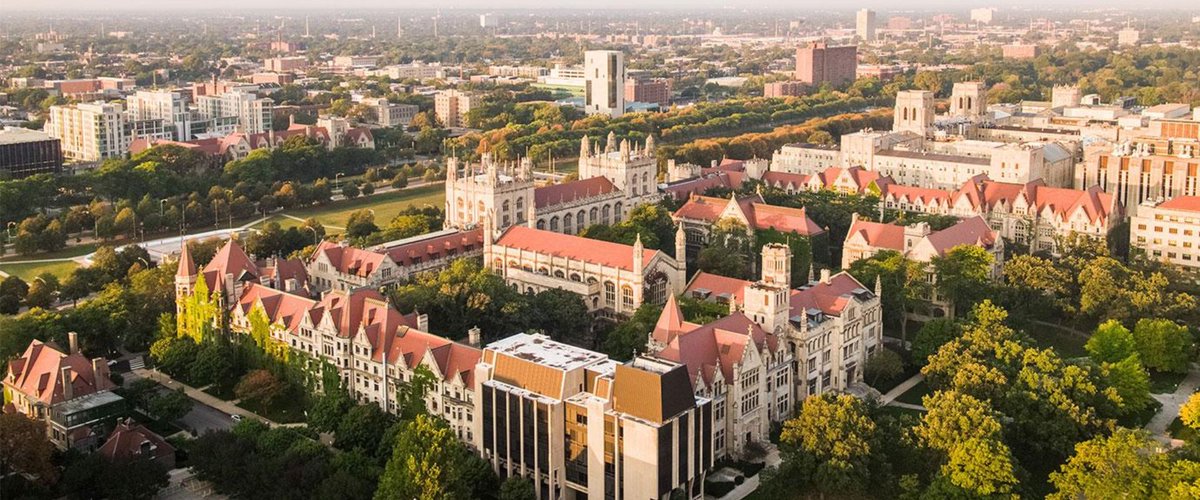
I will join UChicago CS @UChicagoCS as an Assistant Professor in late 2026, and I’m recruiting PhD students in this cycle (2025 - 2026). My research focuses on AI & Robotics - including dexterous manipulation, humanoids, tactile sensing, learning from human videos, robot systems, and anything needed to make robots truly work and improve everyday life. I also place strong emphasis on open-source. Check my homepage to learn more: haozhi.io. Please reachout if you are interested! The deadline is Dec 11th. Link: tinyurl.com/uchiapp.
When training ACT-1, we treated data from diverse, long-horizon tasks in the wild as a first-class citizen. This makes generalization the default, not an exception. The capability envelope expands. More to come.
Everyone says they want general-purpose robots. We actually mean it — and we’ll make it weird, creative, and fun along the way 😎 Recruiting PhD students to work on Computer Vision and Robotics @umdcs for Fall 2026 in the beautiful city of Washington DC!


✈️🤖 What if an embodiment-agnostic visuomotor policy could adapt to diverse robot embodiments at inference with no fine-tuning? Introducing UMI-on-Air, a framework that brings embodiment-aware guidance to diffusion policies for precise, contact-rich aerial manipulation.
Our latest work performs sim2real dexterous grasping using end-to-end depth RL.

We had an incredible time showcasing everything Stretch 3 is capable of at the AI for Good Summit! It was a pleasure to be joined by the talented team from the NYU GRAIL lab, who demonstrated their cutting-edge work on Robot Utility Models. learn more at: robotutilitymodels.com
The Hello Robot team is ready to go at the AI for Good Global Summit! Excited to connect with innovators from around the world and share how Hello Robot is building useful, inclusive robots that make a real difference. Can’t wait to get underway! #AIforGood #HelloRobot @AIforGood


Robot collecting robot data. Having fun with this awesome data collection tool from @notmahi ! *Auto reset at the end.

Generalization needs data. But data collection is hard for precise tasks like plugging USBs, swiping cards, inserting plugs, and keying locks. Introducing robust, precise VisuoTactile Local (ViTaL) policies: >90% success rates from just 30 demos and 45 min of real-world RL.🧶⬇️

Your bimanual manipulators might need a Robot Neck 🤖🦒 Introducing Vision in Action: Learning Active Perception from Human Demonstrations ViA learns task-specific, active perceptual strategies—such as searching, tracking, and focusing—directly from human demos, enabling robust visuomotor policies under visual occlusions. 🧵👇

Making touch sensors has never been easier! Excited to present eFlesh, a 3D printable tactile sensor that aims to democratize robotic touch. All you need to make your own eFlesh is a 3D printer, some magnets and a magnetometer. See thread 👇and visit e-flesh.com



Gaoyue Zhou @GaoyueZhou
936 Followers 204 Following CS PhD @nyuniversity | Prev: @CMU_Robotics , @berkeley_ai | Research Intern @Meta

Pinaki Roychoudhury @fsja_ajau_13145
0 Followers 4K Following
gloria wang @gloriaxwang
105 Followers 816 Following undergrad @ uiuc; @sigrobotics; prev @amazon robotics
Ishan Gaur @Ishan__Gaur
140 Followers 440 Following PhD student Listgarten Lab @ Berkeley; prev Regev Lab, Stanford ‘23 I work on generative models

Chris Hoang @choang333
582 Followers 609 Following Meta FAIR, NYU PhD @agentic_ai_lab • NDSEG fellow • prev. Meta FAIR, Voleon Group, UMich CS
Yihang Zhou @YihangZ242308
5 Followers 3 Following
Krish Mehta @djkesu1
567 Followers 350 Following building @PalatialSim | robots @CILVRatNYU | se @ uwaterloo

Raghav Singhal @_rk_singhal
342 Followers 1K Following Thinking about diffusion models and ML for health. ML PhD at @NYU_Courant. Prev: @MSFTResearch, @RadAI. not on Forbes 30 under 30
Georgy Savva @georgysavva
87 Followers 171 Following MSCS NYU Courant graduate, working on video world models with Prof. Saining Xie.
Bhawna Paliwal @bhawna_paliwal_
123 Followers 642 Following PhD student @berkeley_ai | Prev - Research Engineer @MSFTResearch, UG CSE @iitrpr
Jeevan @jeevan__37
16 Followers 420 Following
Harman Singh (in NYC ... @Harman26Singh
2K Followers 3K Following PhD student @berkeley_ai, RS Intern MSL @MetaAI (NYC). Prev: Gemini @GoogleDeepMind, AI Resident @MetaAI Interested in intelligence.
Shrishti Dalal @shishdalal1
32 Followers 2K Following options trader | prev cs & math @UCBerkeley | prev research @UCBerkeleyNeuro oc | berkeley | chicago lgtm👍
Robert Scoble @Scobleizer
585K Followers 50K Following San Francisco/Silicon Valley AI | Robots, holodecks, BCIs, analysis of new things | Ex-Microsoft, Rackspace, Fast Company | Wrote eight books about the future.

Tony Tao @_tonytao_
951 Followers 613 Following Incoming PhD Student @berkeley_ai | Prev @CMU_Robotics

Ruoshi Liu @ruoshi_liu
3K Followers 787 Following Building better 👁️ and 🧠 for 🤖 @Amazon Prev @Meta @Columbia @CERN
Arthur Allshire @arthurallshire
2K Followers 565 Following PhD student @Berkeley_AI. prev EngSci @UofT / @NvidiaAI 🇮🇪 🇨🇦 🇦🇺🇨🇭🇨🇿

Nahush Desai @NahushDesai
1 Followers 36 Following
Robgen @Robgen_com
400 Followers 1K Following Humanoid robots are reshaping our world. Hundreds of companies are pioneering this revolution — we're here to tell their stories!
whatsyummy @Mandyym67
0 Followers 9 Following

Lisa Kondrich @lisakondrich
3 Followers 45 Following CS master's student @ CILVR NYU. NSF Fellow. prev @ MIT
Rohin Manvi @rohin_manvi
986 Followers 384 Following phd @berkeley_ai w/ @svlevine, prev undergrad @stanford @stanfordailab
Hongjie (Tony) Fang @FangGalaxies
247 Followers 316 Following Ph.D. Student @ Shanghai Jiao Tong University @sjtu1896 & Shanghai AI Laboratory. Interested in robotics 🤖️ and vision 👀.
Lakshya Jain @jlakshya06
1 Followers 28 Following


Abhi Maddukuri @abhirammaddukur
46 Followers 224 Following Masters student at the University of Texas at Austin interested in robot learning.

Jacob Yeung @JacobYeung
49 Followers 171 Following Ph.D. Student @mldcmu, @cmuneurosci | Previously undergrad @berkeley_ai.


Billy Yan @BillyYYan
52 Followers 358 Following Math, CS undergrad @CILVRatNYU #RobotLearning #ComputerVision
straitbizarre @STRAITBIZARRE
40 Followers 8K Following


Gaoyue Zhou @GaoyueZhou
936 Followers 204 Following CS PhD @nyuniversity | Prev: @CMU_Robotics , @berkeley_ai | Research Intern @Meta
Yihang Zhou @YihangZ242308
5 Followers 3 Following
Ishan Gaur @Ishan__Gaur
140 Followers 440 Following PhD student Listgarten Lab @ Berkeley; prev Regev Lab, Stanford ‘23 I work on generative models
Chris Hoang @choang333
582 Followers 609 Following Meta FAIR, NYU PhD @agentic_ai_lab • NDSEG fellow • prev. Meta FAIR, Voleon Group, UMich CS
Krish Mehta @djkesu1
567 Followers 350 Following building @PalatialSim | robots @CILVRatNYU | se @ uwaterloo
Raghav Singhal @_rk_singhal
342 Followers 1K Following Thinking about diffusion models and ML for health. ML PhD at @NYU_Courant. Prev: @MSFTResearch, @RadAI. not on Forbes 30 under 30
Georgy Savva @georgysavva
87 Followers 171 Following MSCS NYU Courant graduate, working on video world models with Prof. Saining Xie.
Bhawna Paliwal @bhawna_paliwal_
123 Followers 642 Following PhD student @berkeley_ai | Prev - Research Engineer @MSFTResearch, UG CSE @iitrpr
Harman Singh (in NYC ... @Harman26Singh
2K Followers 3K Following PhD student @berkeley_ai, RS Intern MSL @MetaAI (NYC). Prev: Gemini @GoogleDeepMind, AI Resident @MetaAI Interested in intelligence.
Tony Tao @_tonytao_
951 Followers 613 Following Incoming PhD Student @berkeley_ai | Prev @CMU_Robotics


Sukrut Oak @sukrut_oak
43 Followers 42 Following CS @Stanford | YC F25 | Prev @Apple, @SpaceX, @StanfordAILab
Angjoo Kanazawa @akanazawa
21K Followers 624 Following Assistant Professor at @Berkeley_EECS, @berkeley_ai. KAIR, @nerfstudioteam. Amazon Scholar @ FAR. Previously advised @WonderDynamics and @LumaLabsAI. she/her.
Ruoshi Liu @ruoshi_liu
3K Followers 787 Following Building better 👁️ and 🧠 for 🤖 @Amazon Prev @Meta @Columbia @CERN
Arthur Allshire @arthurallshire
2K Followers 565 Following PhD student @Berkeley_AI. prev EngSci @UofT / @NvidiaAI 🇮🇪 🇨🇦 🇦🇺🇨🇭🇨🇿
C's Robotics Paper No... @RoboReading
3K Followers 1 Following Recording paper notes by @chongzitazhang who is interested in robot learning
Rohin Manvi @rohin_manvi
986 Followers 384 Following phd @berkeley_ai w/ @svlevine, prev undergrad @stanford @stanfordailab
Hongjie (Tony) Fang @FangGalaxies
247 Followers 316 Following Ph.D. Student @ Shanghai Jiao Tong University @sjtu1896 & Shanghai AI Laboratory. Interested in robotics 🤖️ and vision 👀.
Xiaolong Wang @xiaolonw
22K Followers 1K Following Research Director, @Meta Superintelligence Labs Co-founder of ARI Associate Professor @UCSDJacobs Postdoc @berkeley_ai PhD @CMU_Robotics

Abhinav Gupta @gupta_abhinav_
2K Followers 1 Following Co-founder/President at @SkildAI, Professor @CarnegieMellon

Ken Goldberg @Ken_Goldberg
21K Followers 8K Following Artist and Engineering Prof @UCBerkeley, Co-Founder @AmbiRobotics & @JacobiRobotics. Interests: robots, rockets, redwoods, rebels.
Abhi Maddukuri @abhirammaddukur
46 Followers 224 Following Masters student at the University of Texas at Austin interested in robot learning.
Jacob Yeung @JacobYeung
49 Followers 171 Following Ph.D. Student @mldcmu, @cmuneurosci | Previously undergrad @berkeley_ai.

Jitendra MALIK @JitendraMalikCV
9K Followers 112 Following Prof, EECS, UC Berkeley. VP & Distinguished Scientist, Amazon. https://t.co/sFAc0Y7opv
Jeff Dean @JeffDean
442K Followers 6K Following Chief Scientist, Google DeepMind & Google Research. Gemini Lead. Opinions stated here are my own, not those of Google. TensorFlow, MapReduce, Bigtable, ...
Billy Yan @BillyYYan
52 Followers 358 Following Math, CS undergrad @CILVRatNYU #RobotLearning #ComputerVision
Ritvik Singh @ritvik_singh9
934 Followers 354 Following PhD student @berkeley_ai. prev. @NvidiaAI, @UofT

Bipasha Sen @bipashasen31
4K Followers 253 Following Building @tangiblerobots | PhD (drop out) at MIT | Robotic & AI
Jagdeep Bhatia @JagdeepBhatia8
305 Followers 452 Following ML and Robotics PhD Student @berkeley_ai prev ug @MIT
Mingtong Zhang @alexzhang_robo
226 Followers 303 Following
Wenli Xiao @_wenlixiao
2K Followers 655 Following PhD Student at @CMU_Robotics | GEAR Lab @NvidiaAI | VLA Post-Training & Foundation Model & HumanoidsYou might like